

What does it actually take to get a team aligned around an ambitious goal and keep them motivated when the going gets hard? In this episode of the Female Founders Podcast, Clare Treston joins host Colin Kinner to walk through the core frameworks from her book The Where and The Why: how to craft a Moonshot goal, how to find your team’s Purpose, and how to turn both into practical action.
Whether you’re a solo founder, a startup team, or a growing business, this conversation is packed with practical insights on building the kind of shared vision that actually moves people.
What You’ll Learn in This Episode
- Why strategic planning is so hard, and how to make it stick
- What a Moonshot goal actually is (and why financial targets don’t count)
- The S.T.A.R.S. framework for building the perfect Moonshot
- The E.T.H.O.S. framework for crafting a compelling Purpose statement
- How to use co-creation so the whole team buys in
- Why the Moonshot almost never changes, but the Purpose never changes
- How to use AI to pressure-test your Moonshot and Purpose
- Practical advice for solo founders and small startup teams
Full Transcript
Why Strategic Planning Is So Hard
Colin: Let’s start with the problem you’re solving. Strategic planning seems like something everyone should be able to do, but it’s actually really hard. Can you talk about why you developed this methodology?
Clare: The problem I’m solving, and why I’ve written the book, is that strategic planning is genuinely complex. It’s difficult for people to remember where they’re going and why, especially for frontline employees who need to connect with the bigger vision and understand every day how they’re contributing to the bigger picture. It also helps leaders communicate clearly to everyone in the organisation.
Colin: I’ve spoken to so many startup founders and asked, “What’s the vision?” and five minutes later they’re still talking and I still don’t know what it is. Why is that so hard?
Clare: It is hard. That’s exactly why I’ve written the book. I’ve done this hundreds of times and figured out how to get it down to two very succinct, catchy statements, a Moonshot statement and a Purpose statement. Short enough that everyone can remember them. Getting there is an art, but there’s a process that works.
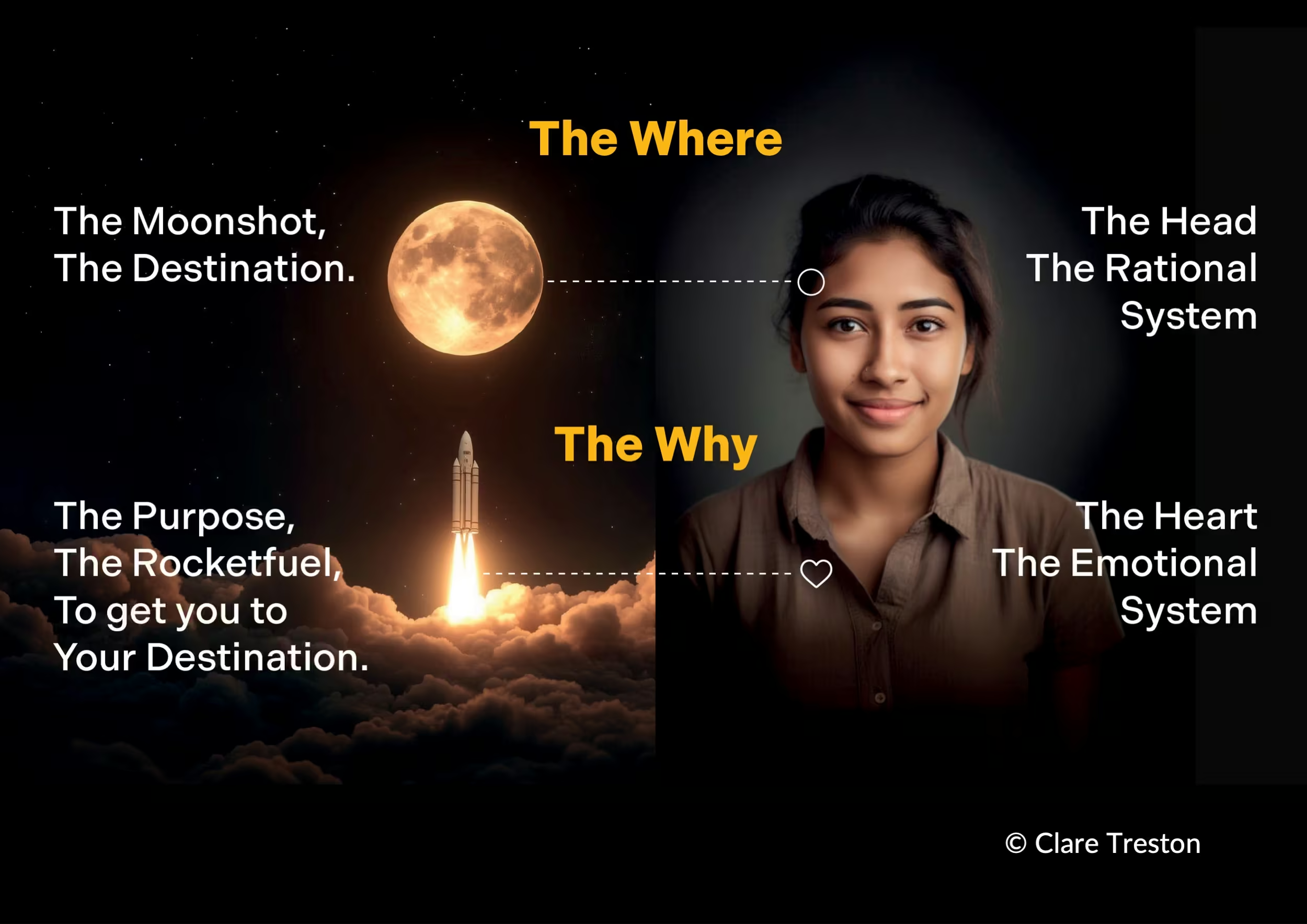
“You need two things: a Moonshot and a Purpose. The Moonshot is the head, the rational goal. The Purpose is the rocket fuel, the heart and passion that gets you there.”
What Is a Moonshot? The 80/20 Rule
Colin: Can you walk through the process? It’s not a random brainstorming session, right?
Clare: Co-creation is a really key part. The Moonshot taps into the rational system, it’s a goal everyone can point to and say, “That’s where we’re going.” The Purpose is the rocket fuel: the heart and passion that will get you to the destination. People come back to it especially when things get hard.
Clare: For the Moonshot, I suggest a three-year horizon. Ask: what do we want the company to look like by then? What products and services will we offer? What geographies? What’s our team and culture like? From that process, one thing usually comes to the fore, the goal everyone can rally around.
Colin: A lot of teams I work with are just a solo founder or two co-founders. Can this work at that scale?
Clare: Absolutely. You do a similar process, answering those questions about where you want the business to be in all its aspects, documenting it. It helps to have a mentor, a coach, or even a trusted friend to talk it through. AI can also be useful, it’s quite good at helping you validate and refine your thinking if you don’t have someone to lean on.
The S.T.A.R.S. Framework
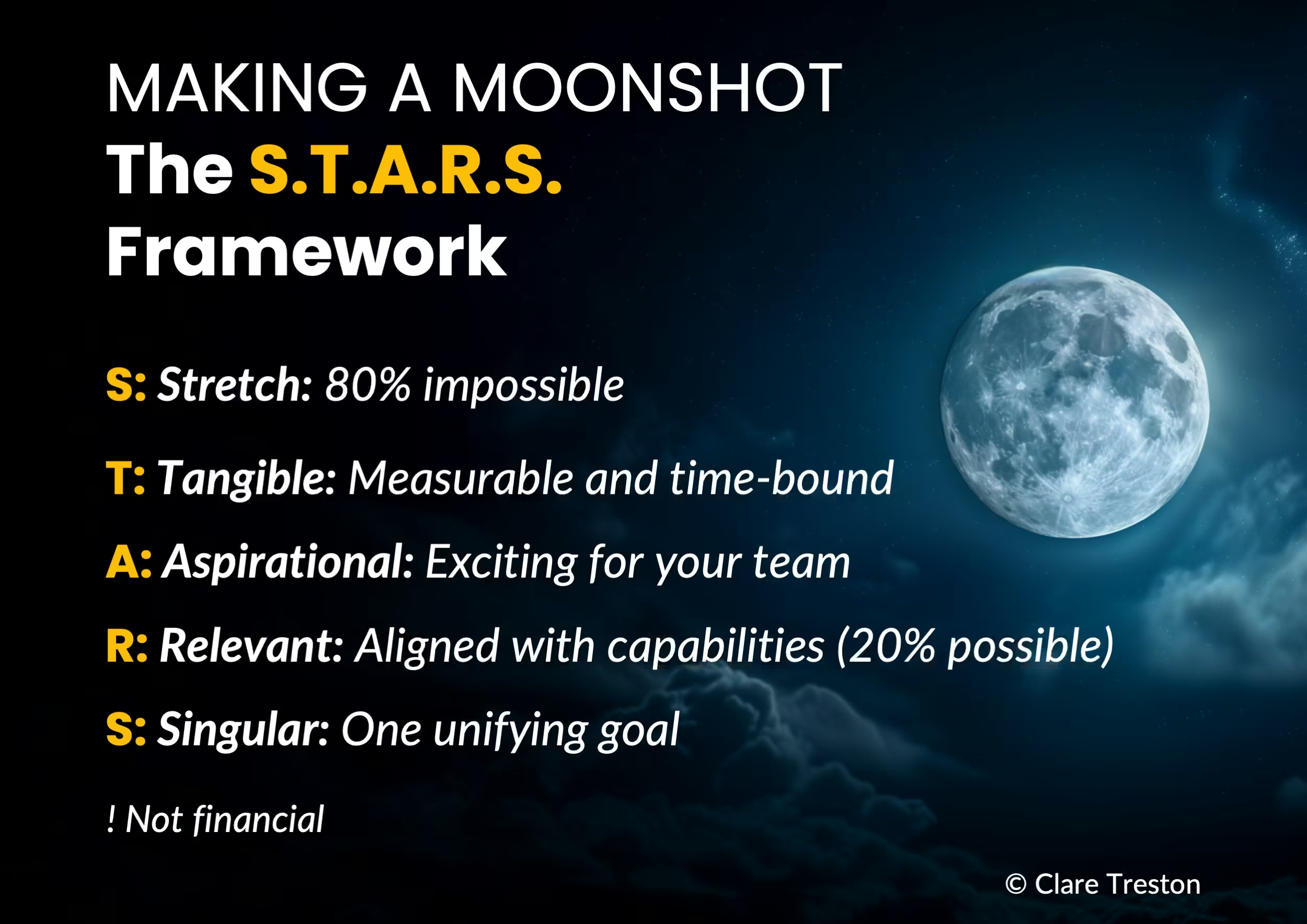
Colin: You’ve got a great acronym for the Moonshot, S.T.A.R.S. Can you walk through it?
Clare: I did try to get MOON to spell out, but that was a bit tricky, so we’ve got STARS, which is pretty close!
- S: Stretch. It should be 80% impossible, 20% possible. If it feels comfortable, it’s not ambitious enough.
- T: Tangible. Time-bound and measurable. Not “someday” – by when, specifically?
- A: Aspirational. Exciting enough that the team wants to rally behind it.
- R: Relevant. Within the realm of possibility for your organisation, that’s the 20% part.
- S: Singular. One big, chunky goal. Multiple moonshots dilute focus and confuse people.
Colin: The problem is a lot of people set moonshots that just aren’t a stretch goal, like 10% year-on-year profit growth.
Clare: Exactly. In workshops I actually play with the number in front of everyone. If there’s a number in the Moonshot, I’ll add another zero or a couple of extra commas. You can feel the energy in the room shift completely. That’s what moonshotting is about, imagining what’s truly possible.
The E.T.H.O.S. Framework: Finding Your Purpose
Colin: Purpose feels like the underplayed part. People set a destination and say “Let’s go” – but they miss the “Why are we doing this?” What’s your process for helping teams find their purpose?
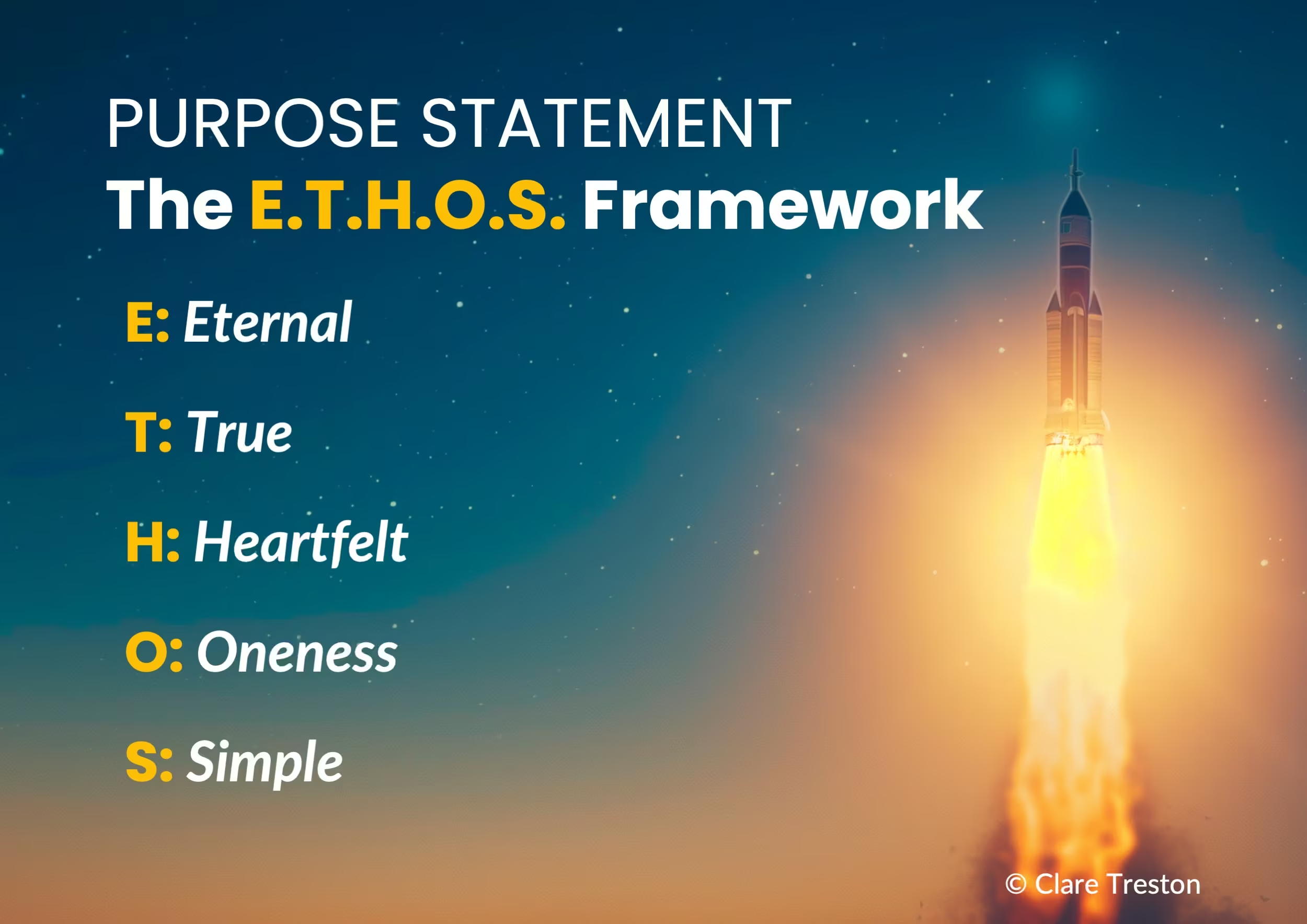
Clare: The Moonshot is the head – a goal, rational and clear. The Purpose is the heart. It’s a little more nuanced and usually harder to articulate. I use the acronym ETHOS:
- E: Eternal. It should last forever, the timeless reason you exist.
- T: True. You have to walk the talk. Employees see straight through a Purpose that isn’t lived.
- H: Heartfelt. It has to stir something.
- O: Oneness. It creates a sense of unity across the whole organisation.
- S: Simple. No more than three concepts. Under seven words. People need to remember it.
Colin: What about a business that doesn’t obviously “save the world” like accounting software for veterinarians?
Clare: Totally common. Service and B2B businesses often struggle to see the link to the end user. But everyone’s making a difference, whatever they do, it’s about making those connections. In my experience, about 50% of my clients end up with a customer-oriented Purpose. For example, Infectious Clothing makes scrubs for hospitals. Their Purpose is “Making people feel great at work.” Simple, true, and the founder Pete, a former nurse, has a firsthand connection to it.
“I’ve never had a team drop their Moonshot. Once they’ve said it out loud and agreed – they commit to it. The Purpose? That never changes at all.”
Using AI to Pressure-Test Your Moonshot
Colin: How do you use AI effectively in this process without it just telling you what you want to hear?
Clare: I’m a big fan of AI. I have my entire book sitting in my AI as a project, it’s like having my brain in there. For example, you can put the S.T.A.R.S. criteria into your AI and say: “We’re developing our Moonshot and we want it to meet these criteria, is this a stretch goal? Is it tangible? Aspirational? Relevant? Singular?” It gives you honest structured feedback against a clear framework, which is exactly what it’s good at. For the Purpose, once you’ve identified your themes, AI is great for the creative wordplay, brainstorming how to turn those themes into a compelling statement.
Putting It Into Practice: From Workshop to Wall
Colin: None of this matters until you actually put it into practice. What’s your advice for implementation?
Clare: At the end of a workshop, we identify the major projects needed to reach the Moonshot, usually around six for the next 12 months. We break those into smaller tasks, assign leads and start dates. Then the same for the Purpose and values. It’s not complicated, just break the big goal into this year’s projects, break those into tasks, assign ownership and timelines. The key is that all of it aligns back to the Moonshot. If a goal doesn’t connect to it, it can pull people in the wrong direction.
Colin: I love the one-page format. How do you force people to get all of this onto a single page?
Clare: I literally force them in the workshop – but I also give people gold stars! On the template, there’s a column for gold star emojis when someone achieves a task. The templates are actually free on my website at thewhereandthewhy.com/templates. Once it’s on one page, people come back to it every month or couple of months to check progress. Oztix, for example, have their Moonshot on the wall and communicate progress to the whole team every month. They’re fully committed – and still on track.
Advice for Early-Stage Startups and Solo Founders
Colin: What’s your advice for really early stage teams, a solo founder or small co-founding team?
Clare: It’s incredibly valuable at that stage. Often co-founders are actually frightened to have this conversation, but when they do, it’s such a relief to discover they have a similar mindset, or to surface disagreements early before they become bigger problems. Writing it down improves the odds of achieving it by 42%. Put it beside your mirror, your desk, as your desktop background. When you’re doing a side hustle – working evenings and weekends – having that poster with where you’re going and why keeps you motivated through the hard parts.
Think Bigger: Final Advice
Colin: Any final advice for startup founders?
Clare: Think bigger and go higher. A three-year horizon is really useful. People achieve their Moonshot a lot quicker than they think. I had a founder who felt sick setting his three-year Moonshot, he did it in three months. That’s what Moonshotting is: big picture thinking, a little bit crazy.
Clare: And don’t be disappointed if you don’t hit it fully. I call it the Phases of the Moon. If it’s 80% impossible and you get 40% there, you’ve still done double what you thought was possible. Go big or go home.
Think Bigger: Final Advice
Colin: Any final advice for startup founders?
Clare: Think bigger and go higher. A three-year horizon is really useful. People achieve their Moonshot a lot quicker than they think. I had a founder who felt sick setting his three-year Moonshot, he did it in three months. That’s what Moonshotting is: big picture thinking, a little bit crazy.
Clare: And don’t be disappointed if you don’t hit it fully. I call it the Phases of the Moon. If it’s 80% impossible and you get 40% there, you’ve still done double what you thought was possible. Go big or go home.
“Writing your Moonshot down improves the odds of achieving it by 42%” Clare Treston
About Clare Treston
Clare Treston is a Brisbane-based Moonshot Strategist and author of The Where and The Why: Craft a Clear Moonshot and Purpose to Make Your Team Happy and Successful. She has facilitated strategic planning workshops with hundreds of organisations across every industry and state in Australia. Her book is endorsed by professors from Wharton and London Business School.