

Most strategic plans look impressive on paper and gather dust on a shelf. Clare Treston has spent years figuring out why, and more importantly, what to do instead. In this conversation with host Aro Benaiah, Clare shares how two simple statements, a Moonshot goal and a Purpose, can align any team, no matter the size or industry.
From a boat builder in Cairns whose team now builds “dream boats” every day, to a computer hardware company that renamed its entire business after discovering its purpose, the examples in this episode show what’s possible when a team finally knows where it’s going and why it matters.
What You’ll Learn in This Episode
- Why most strategic plans fail, and the one thing that changes everything
- How a Moonshot goal is completely different from a SMART goal
- The S.T.A.R.S. framework for crafting the perfect Moonshot
- Why thinking to the end of the decade beats annual goal-setting
- How to find your Purpose even when you’re not “changing the world”
- The E.T.H.O.S. framework for a Purpose statement your team will remember
- How Tech for Good renamed their entire company, and hit the AFR Fast Starters list
- The “Dream Boats” story - how a Cairns boat builder transformed team engagement
- Why the best strategy fits on a poster, and why that’s a feature, not a limitation
Full Transcript
From Cairns to Hundreds of Businesses Across Australia
Aro: You’ve worked with hundreds of businesses across Australia. What patterns did you begin to notice early on?
Clare: I was very fortunate to work with a government program that made strategic planning free for participating businesses. Normally a strategic planning workshop can be quite expensive, so this broke down the cost barrier. I was able to work with hundreds of businesses across every industry, from the outback to the city, fashion designers, farmers, AI startups, manufacturers. It was a wonderfully diverse and eclectic mix.
Clare: The patterns I noticed were consistent. Having a really simple and actionable framework was critical, and something that wasn’t time-consuming, because time is the most precious resource for small and medium businesses. Not a big, waffly document. Something that everyone in the organisation feels some ownership of and can action every single day.
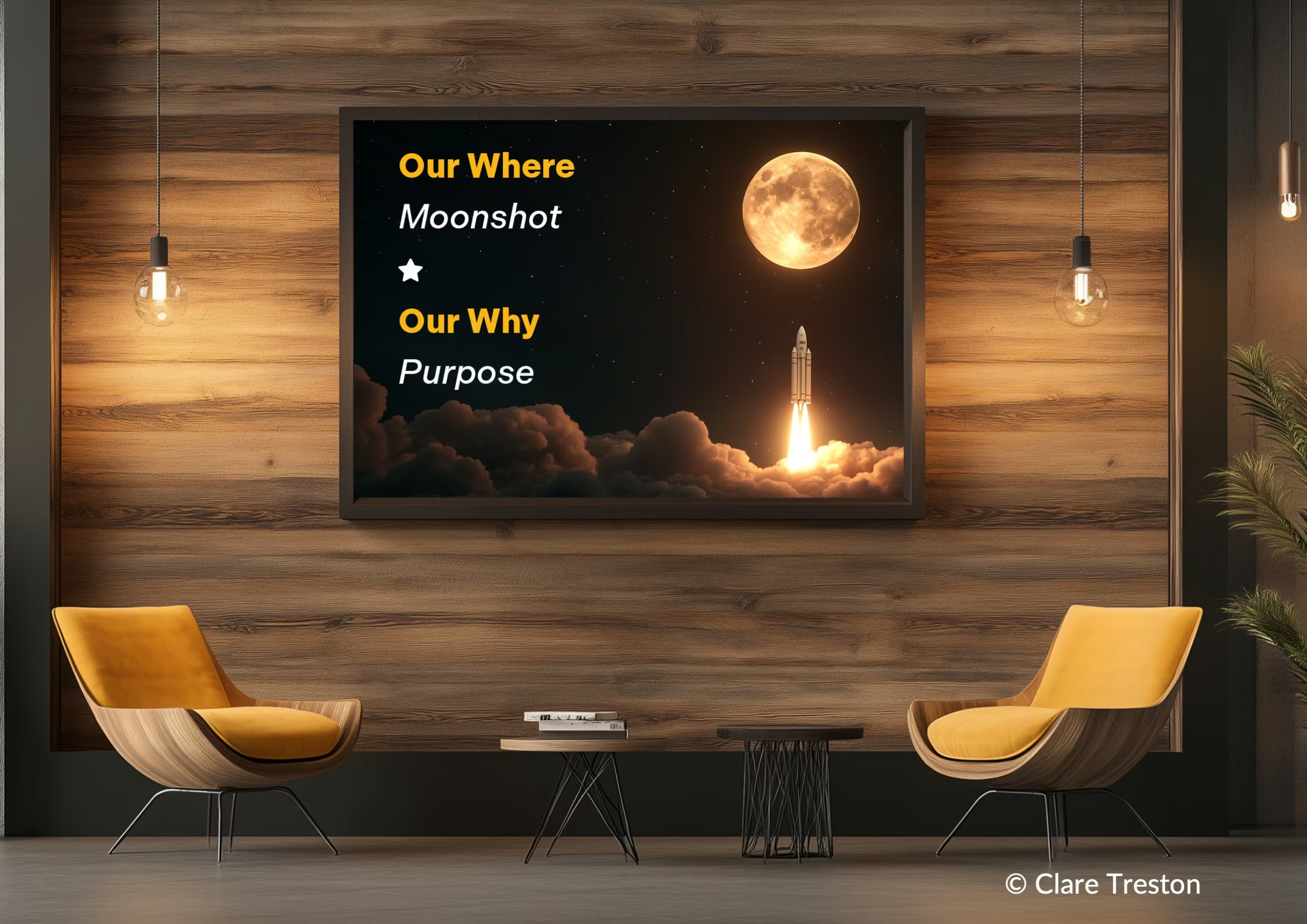
“Imagine a rocket taking off toward the moon. The moon is The Where, your Moonshot goal. The rocket fuel is The Why, your Purpose. Just two statements on a poster. Everyone looks at it every day.”
Why Strategic Plans Fail
Aro: Why do so many strategic plans fail, even when they look good on paper?
Clare: Probably because they’re too complex. But the bigger issue is that most plans are handed down from the top, the leader says “This is where we’re going” without truly involving the team. There’s a McKinsey study that shows co-created plans are 3.4 times more likely to succeed. When people contribute to the plan, they feel ownership of it. Not bringing the team on that journey is, in my experience, the single biggest stumbling block in strategic planning.
How a Moonshot Is Different From a SMART Goal
Aro: How is a Moonshot different from the traditional goals most teams are used to?
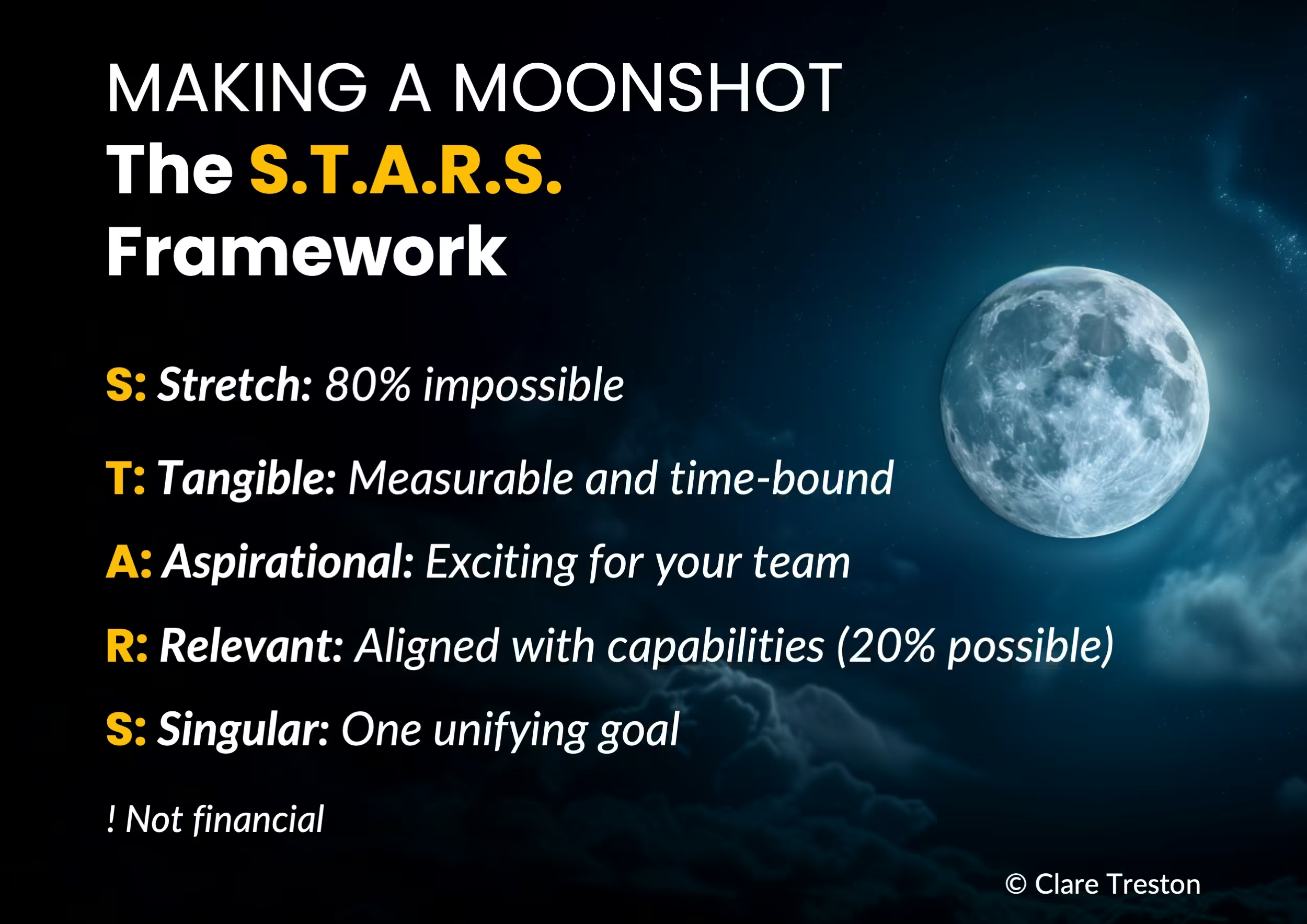
Clare: A SMART goal is specific, measurable, achievable, realistic and timely. A Moonshot deliberately rejects the “achievable” and “realistic” parts. That’s exactly what makes it exciting. I use the acronym S.T.A.R.S.:
- S: Stretch. 80% impossible, 20% possible. It’s unrealistic by design.
- T: Tangible. Measurable and time-bound. Not vague.
- A: Aspirational. It gets the whole team excited and wanting to be on that journey.
- R: Relevant. That’s the 20% possible, within the realm of capability.
- S: Singular. Just one big, exciting goal. Multiple competing goals dilute focus and confuse people.
Clare: That’s also where a Moonshot differs from most other frameworks, organisations often have a long list of goals all competing with each other. A Moonshot gives you one clear, chunky, exciting destination that unifies everyone.
Why “By the End of the Decade” Beats Annual Goal-Setting
Aro: Why do you encourage leaders to think to the end of the decade rather than just the next year?
Clare: It actually mirrors exactly what President Kennedy said in 1962: “We choose to go to the Moon by the end of the decade.” That framing captures the team’s imagination in a way that “by end of this year” simply doesn’t.
Clare: A one-year goal is often incremental, you can only do so much. Thinking to the end of the decade makes you think bigger and longer term. Then you work backwards: what does that big goal require us to do this year? One of my clients described it beautifully: it lifts your horizon. You stop being busy doing lots of small things and start doing things that actually contribute to something bigger and more exciting.
“I had a founder who felt sick setting his three-year Moonshot. He did it in three months. That’s what moonshotting is, big picture thinking, a little bit crazy.”
The Most Common Mistakes When Defining The Where
Aro: What are the most common mistakes teams make when defining their Where?
Clare: The process I recommend starts with co-creation, you get the team together and build a vivid vision of what the organisation looks like by the end of the decade. What products and services are you offering? Which customers are you serving? What geographies are you in? What does the team and culture look like? You detail all of it. From that rich picture, one clear Moonshot usually emerges.
Clare: There’s a Wharton study that found 90% of leaders communicate fuzzy or blurry visions, their teams literally don’t know what the vision is. That clarity gap is enormous. So having one really clear, shared Moonshot is already a competitive advantage.
Clare: I also encourage teams to do a quick business case once they’ve settled on their Moonshot. You can spend four years of time and energy heading somewhere and then realise you don’t actually want to be there. And make sure it’s in that 80/20 sweet spot, big enough to be exciting, but not so big that the team keeps missing it and gets disheartened. I’ve had teams hit their four-year goal in six months because they didn’t think ambitiously enough.
Why Purpose Is the Rocket Fuel
Aro: You also emphasise the Why. Why is Purpose often misunderstood or watered down in organisations?
Clare: Purpose is if anything more important than the goal itself. The Moonshot is the head, the rational, measurable destination. The Purpose is the heart, the rocket fuel that actually propels you there. If you have a really clear goal but no compelling reason for why you’re pursuing it, the team will eventually ask: why are we expending all this time and energy?
Clare: Research shows 70% of employees say their sense of life purpose is actually defined by their work. That’s significant. If you can connect what the company does to a clear, authentic purpose, you can make people’s working lives genuinely more fulfilling.
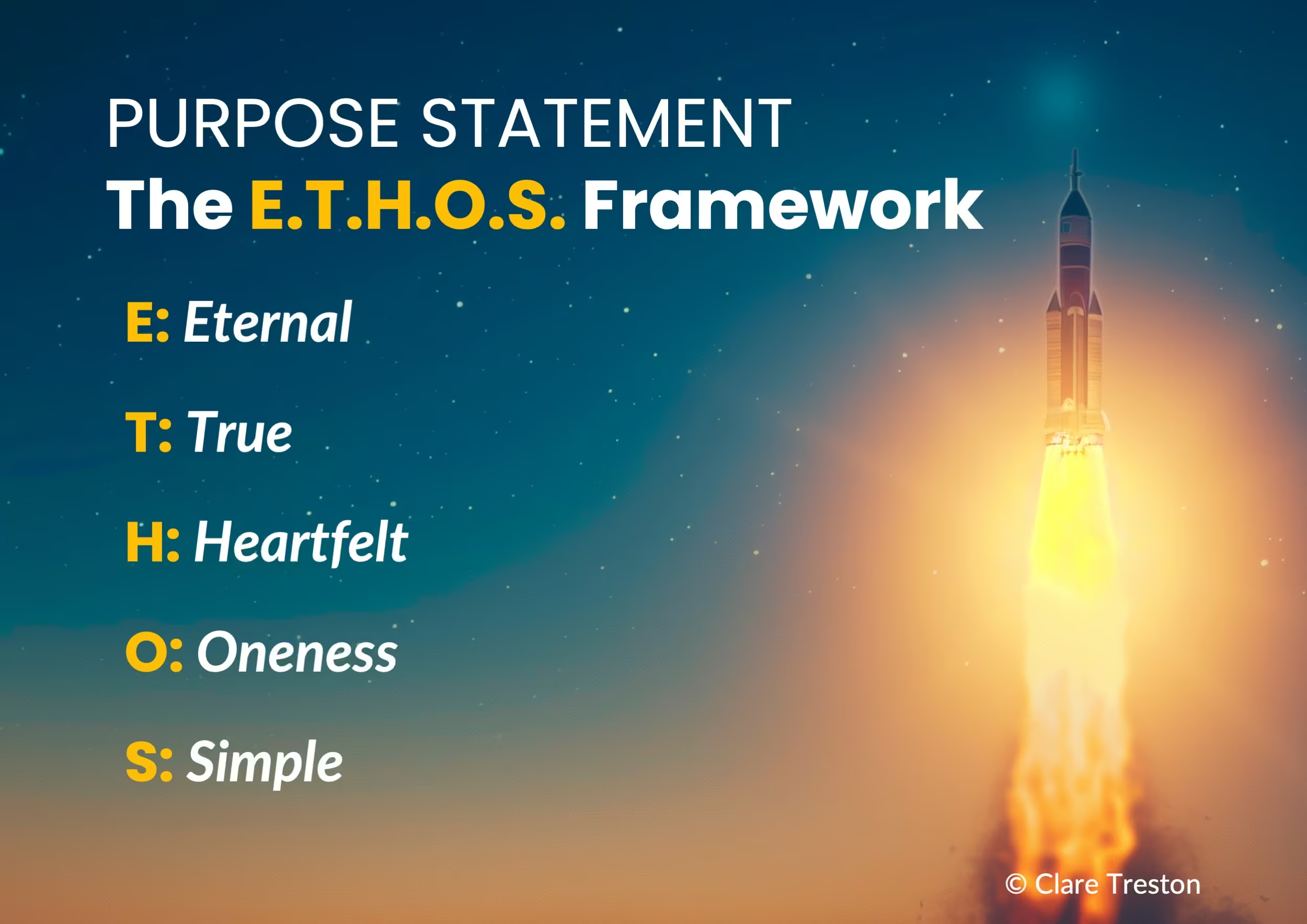
Clare: I use the acronym E.T.H.O.S. for crafting a great Purpose statement:
- E: Eternal. It should last forever. This statement never changes.
- T: True. You can’t say one thing and do another. It has to be authentically lived.
- H: Heartfelt. It needs genuine emotional connection.
- O: Oneness. It creates a sense of unity across the whole team.
- S: Simple. Under seven words. No more than three concepts. People need to remember it.
Finding Purpose When You’re Not “Changing the World”
Aro: How do you help sceptical or disengaged teams buy into purpose-driven plans?
Clare: The teams that struggle most tend to be B2B and service-based businesses, they don’t always see a clear link between what they do and the end user. So we do a customer persona exercise to help them understand who their customers are and the difference they make to those customers’ lives.
Clare: I had a client, Infectious Clothing, who makes scrubs, uniforms for nurses and doctors in hospitals. Their purpose statement is “Making people feel great at work.” Simple, true, and the founder Pete is a former nurse with a firsthand connection to it. Some people think a purpose statement has to be world-changing. It doesn’t. It has to be true. Everyone’s contributing something. It’s about unpacking what you do every day and connecting the dots to show how it genuinely helps people.
Case Study: Tech for Good, Number 8 on the AFR Fast Starters
Aro: Can you share an example of a business that completely transformed once they clarified their Where and Why?
Clare: There’s a wonderful story about a company called Tech for Good. They started as a traditional computer hardware reseller. We did a workshop together and they defined their purpose as “tech for good” — and they literally shut down their existing company and started a new one with that name. They became a B Corp, refocused entirely on serving the not-for-profit, government and socially responsible sectors, and became a purpose-led supplier of computer hardware. They’re still doing what they did before, but with a completely reimagined positioning and business model. The result? They were number eight on the Australian Financial Review’s Fast Starters list. Being purpose-led turned them into a high-growth company.
“They shut down their entire business and started a new company called Tech for Good. Being purpose-led turned them into a high-growth company, number 8 on the AFR Fast Starters.”
Case Study: Hooker Boats and the Power of “Dream Boats”
Aro: How can small businesses and trades-based teams apply this without overcomplicating things?
Clare: A wonderful example from my home town of Cairns is Hooker Boats – they build boats for island communities and tradies. We did the customer persona exercise and looked at who their customers really are. For island communities, a boat is like the family car. Having one makes you the king of your community. For a tradie, being able to take a beautiful boat out on the weekend, that’s a status symbol and a dream.
Clare: From that exercise came two words: “Dream Boats.” It’s one of my favourite purpose statements, only two words long. Suddenly, every person on the factory floor building a boat every day knows they’re making someone’s dream come true. The engagement shift was tangible. And their Moonshot was a quantity goal, increasing to 100 boats a year. The Where and the Why, both clear and simple. It works for any business.
Why the Best Strategy Fits on a Poster
Aro: Why do you believe the best strategy should be simple enough to fit on a poster?
Clare: The main reason is that it’s memorable. Most of the time, frontline employees don’t even know what the strategy is, it’s locked away in a document no one reads. When the strategy is on the wall every single day, people connect what they do with the bigger picture. I’ve even had clients tell me their team members will call out leadership if they’re working on something that doesn’t align with the strategy. Frontline staff holding leadership accountable to the plan, that’s the power of clarity. It’s an art to get those two statements exactly right, but when you do, the whole organisation focuses and aligns.
One Question to Ask Yourself Right Now
Aro: If someone feels stuck or uninspired right now, what’s one first question they could ask themselves?
Clare: By the end of the decade… what do you want to have achieved? Don’t think about just this year. Think bigger. On New Year’s Day 2030, what do you want to be able to say you did? That one shift, from short-term to decade thinking, changes everything about how you set goals and make decisions today.
What Clare Hopes Leaders Take Away from the Book
Aro: Looking ahead, what do you hope leaders take away from The Where and The Why long after they finish reading it?
Clare: The book is in two parts. The first half explains the frameworks – E.T.H.O.S., S.T.A.R.S., the types of Moonshots, the types of Purpose statements. The second half is how to actually do it yourself. I’ve included a lot of downloadable tools so people can run the process with their own team. And I recommend in the book that once you’ve developed your Where and Why, you have a launch party – celebrate it, make it real. I’d genuinely love to see photos and hear people’s own stories.
About Clare Treston
Clare Treston is a Brisbane-based Moonshot Strategist and author of The Where and The Why: Craft a Clear Moonshot and Purpose to Make Your Team Happy and Successful. She has facilitated strategic planning workshops with hundreds of organisations across every industry in Australia, from AI startups to boat builders, muesli makers to manufacturers. Her book is endorsed by professors from Wharton and London Business School.